
Ever asked a question on Google and wondered why some websites appear higher than others? You’ve been introduced to SEO. But, what is SEO anyway ? At its basic level, SEO, an acronym for search engine optimization, refers to the act of improving a website such that it appears high in search results without paying for advertising.
I was asking myself the same question several years back. Indeed, It was truly unbelievable that some sites would manage to get their places on the first page of the search engine, while some others who actually had more interesting content did not even appear in the index of the search engines at all. I started my journey with learning about SEO by joining many free courses and learning from many articles and videos on YouTube. But after that, my opinion was changed to performing SEO rather than studying it. Hence, I created my website through WordPress and learned the technique of on-page SEO through Google Search Console.
So, what is SEO, and why does it matter for a website?
Why SEO Matters and What Is SEO ?
SEO is basically an activity where you optimize the content and technical aspects of your website such that it is easily understood and trusted by the search engines like Google and reaches the relevant audience.
This activity is important because organic search continues to be one of the most significant traffic sources for websites. As opposed to the paid advertisements, SEO builds up cumulative visibility and a properly optimized page can keep receiving traffic even after months or years since its publication.
Some of the criteria that can be used to rank pages on the web are listed below:
- Relevance: Does the content match the query typed in by the user?
- Quality: Is the information provided in the content of high quality?
- Authority: Has the material been referred or cited on a few trustworthy websites?
- User experience: Is the site fast-loading and mobile-friendly?
- Technical health : Can search engines actually crawl and index the page?
- The Beginner’s Expensive Mistake: Disregarding Search Intent
Like any beginner, I too started off believing that SEO consisted mainly of cramming a term into a web page as many times as possible. It felt logical — more mentions of the keyword should mean better rankings, right?
This is not how things work, and this would be my main piece of advice for a beginner in SEO. If the search query is “what is SEO,” people want an explanation, not the page containing fifteen repetitions of the word “SEO” without any explanations. Google is now advanced enough to distinguish when the content contains the keyword but does not give an answer to the question that is asked. The content that answers the need of the searcher always beats the content rich in keywords.
What is SEO ? How to Do Basic SEO Step-by-Step for a Beginner
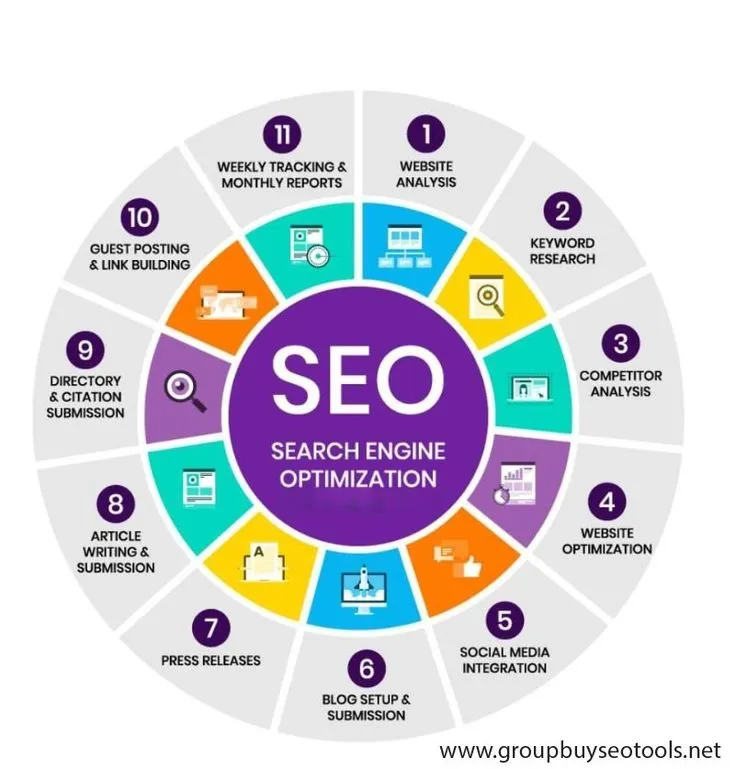
Below is the process that I personally follow whenever I optimize a page, based on my first WordPress project experience:
Find the keyword and understand intent. The first step is finding the primary keyword and understanding the searcher’s intent – information, comparison, product or steps.
Examine the existing pages that rank well for that particular keyword and see where gaps exist that you can cover.Write clear, complete content. Focus on genuinely answering the query — thoroughly, but without unnecessary filler.
Ensure that the page is properly optimized concerning its key factors. There are many vital factors like Title tag, Meta Description, Heading, URL, Alt Tags, Internal Links, and so on.
Technical aspects of the page need to be checked. It should be fast loading and mobile-friendly.Visit the page, analyze its performance and make optimizations. Look through the performance of your page in Google Search Console periodically.
On-Page SEO Checklist
| Element | What to Do |
| Title Tag | Incorporate the keyword naturally within 60 characters |
| Meta Description | Describe the contents of the page and incorporate the keyword in 150-160 characters |
| H1 | The main keyword is included on each page. |
| URL | Short, descriptive, includes the keyword |
| Headings (H2/H3) | Organize content logically, use related keywords |
| Images | Compressed for speed, with descriptive alt text |
| Internal Links | Point to pertinent sections of your website |
| External Links | Link to one or two trustworthy sources |
On-Page vs Technical vs Off-Page SEO
It is very complicated to understand these three terminologies for people who are starting with SEO techniques. However, let’s simplify things for you:
- On Page SEO – Optimize the content and HTML code of that particular web page (headings, use of keywords, internal linking).
- Technical SEO – Ensure that the website works efficiently in terms of crawl and indexation of the website (load time, mobile friendly).
- Off-page SEO – Gain authority due to external factors, mostly due to backlinks from authoritative websites.
It is important to understand that all three are interconnected. In situations where there are some technical problems with the website or it does not have authority, on-page optimization will be of no use at all.
Common Mistakes of Novice SEOs
- Prioritizing Keywords Over Search Intent
- Ignoring page speed and mobile experience
- Skipping internal linking between related pages
- Publishing and never revisiting or updating content
- Copying the competitor’s content instead of adding a unique angle
Final Thoughts
One piece of advice I wish I would have gotten at the start of my journey would be that it’s important to help people more than try to rank in Google. Rankings tend to follow when the content genuinely solves someone’s problem — chasing the algorithm directly rarely works as well as chasing usefulness.
Search engine optimization (SEO) is an on going process that involves learning and experimentation. One should start with optimizing just one page initially to see how things work out.